
Artificial intelligence isn’t just a research project anymore; it’s embedded in how businesses actually run. Companies are pushing AI into automation, customer-facing systems, product features, and core analytics, not just testing it on the side. That shift explains the surge in demand for specialized AI services firms.
The four companies we’re looking at here represent genuinely different ways of delivering AI. Some operate as straight software engineering partners building products. Others are closer to data shops or platform providers. The breakdown below covers their roles and where each one carries real weight.
What AI Services Companies Actually Do
The phrase “AI services” gets thrown around a lot, but the work itself takes different forms. Some vendors come in to help figure out the strategy, where AI even makes sense for the business. Others are deep in the code, building machine learning models or connecting AI tools to creaky old enterprise systems.
That means the vendors differ not just in tech stack, but in the role they play on a project.
Core AI Services Offered by Enterprise Vendors
Most serious AI services shops offer a mix of capabilities covering different stages of an AI project. You might get strategic planning at the front end, then move into development and long-term support. The standard list of offerings usually looks something like this:
- AI strategy and consulting;
- Machine learning development;
- Generative AI integration;
- Data engineering and model support;
- AI deployment and maintenance.
Not every firm covers all these bases equally. That’s why picking an AI partner means looking past the brand name and checking how they actually deliver.
How We Selected the Companies
The AI vendor space is crowded as hell. We focused this list on firms with real enterprise project experience. The point isn’t to crown some universal “winner.” It’s to show a few companies with genuinely different takes on AI development.
Evaluation Criteria
To keep this practical, we picked companies based on a handful of technical and operational factors. These help gauge whether a vendor can actually handle real-world AI work:
- Enterprise engineering experience;
- Breadth of AI service offering;
- Ability to integrate AI into existing systems;
- Industry relevance and domain knowledge;
- Technical depth of AI and data teams.
These criteria let you compare firms with different positioning but the same focus on enterprise-level AI.
1. Avenga
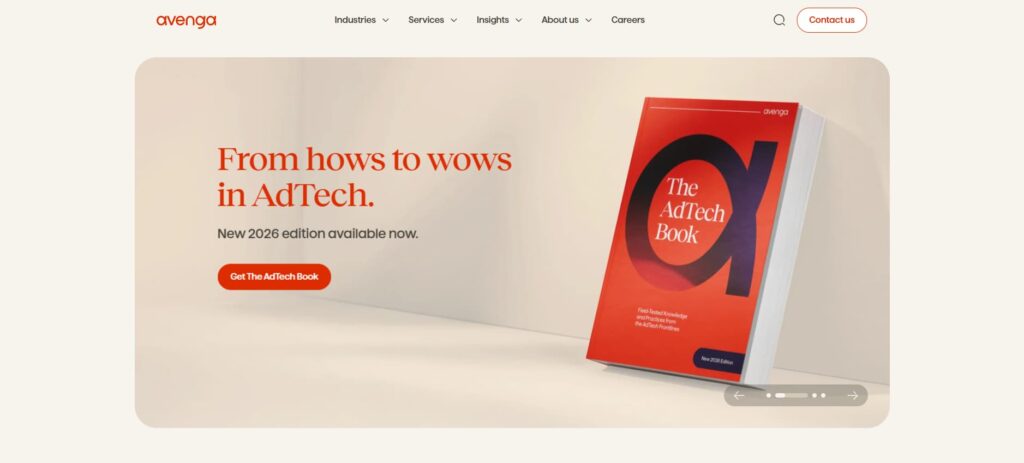
Avenga, an AI services company, is an international software engineering firm with a ton of enterprise clients. Their AI work isn’t some separate skunkworks project. It’s folded into broader digital transformation efforts. They treat AI as one tool among many for modernizing how businesses operate and build products.
Key AI Capabilities
The firm approaches AI as a way to upgrade business processes and products, not as an isolated experiment. Their capabilities tend to cluster around these areas:
- Enterprise AI strategy and implementation;
- Machine learning development for business applications;
- Generative AI integration into digital products;
- AI-driven data platforms and analytics;
- AI solutions combined with cloud and software engineering.
This setup means AI doesn’t sit in a silo. It becomes part of the broader enterprise architecture from the start.
2. Intellias
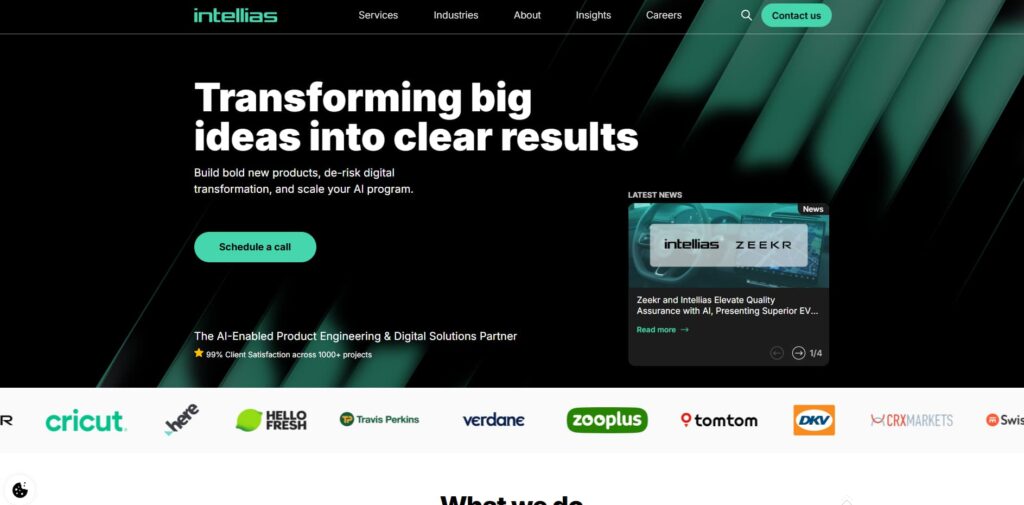
Intellias operates as a software engineering company with a strong product focus. They’ve built up an AI practice that runs alongside their core engineering work, mostly helping clients bake AI into digital products. Their clients span a bunch of different industries.
AI Engineering Focus
The AI services at Intellias usually show up during product development or when a client needs to modernize an existing system. Their main areas of work break down like this:
- AI and machine learning product development;
- Predictive analytics solutions;
- AI features for digital platforms;
- Computer vision and data processing solutions.
According to our analysts, that focus makes them a solid fit for organizations weaving AI into their own products.
3. DataArt
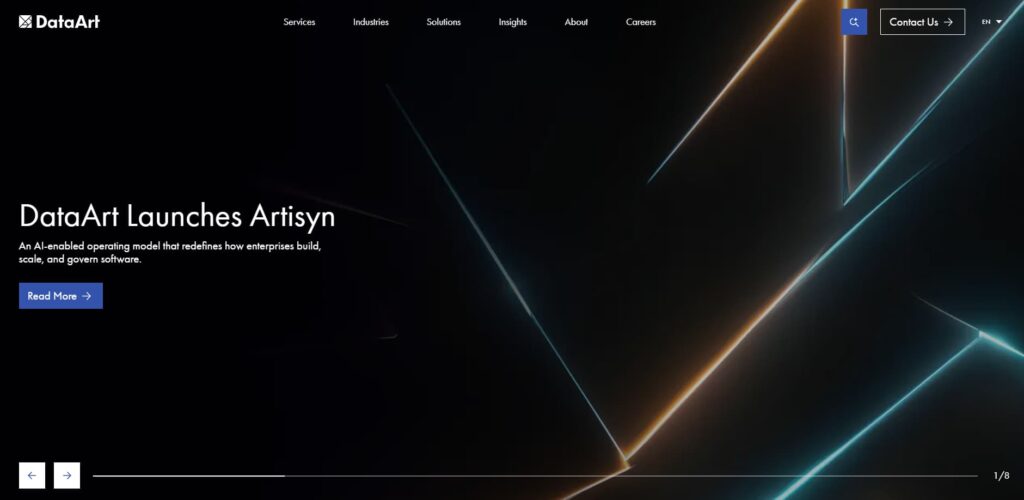
DataArt sits in the software engineering space but carries heavy weight in data engineering and AI. Look at their project history and you’ll see a lot of analytics platforms and data-heavy systems. They’re not just slapping AI on things; it comes out of the data work.
AI And Data Expertise
The company typically deploys AI inside data-heavy environments and analytics tools. Their core work includes:
- Machine learning systems development;
- Data analytics platforms;
- AI-driven decision support systems;
- Automation of data processing workflows.
This approach works best for companies where AI needs to live inside large, messy data sets.
4. DataRobot
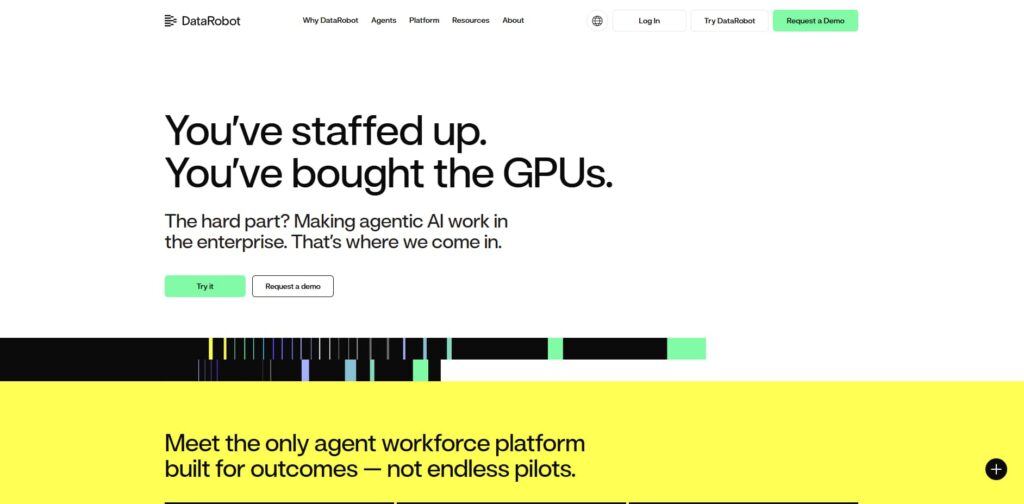
DataRobot isn’t your standard engineering vendor. They offer an AI platform built for enterprise-scale development, with heavy automation around machine learning. The focus is on helping companies build and manage models without reinventing the wheel every time.
AI Platform Capabilities
The DataRobot platform is designed to help organizations scale AI work and push models into production reliably. Core features include:
- Automated machine learning workflows;
- Model lifecycle management;
- Enterprise AI deployment tools;
- AI governance and monitoring.
This setup makes sense for companies trying to build internal AI capacity and scale it across teams.
How to Choose an AI Services Company
Not every AI vendor solves the same type of problem. Some companies specialize in building AI products from scratch, while others focus on integrating models into existing enterprise systems. The right choice usually depends on the structure of your project and the technical maturity of your organization.
When evaluating potential partners, it helps to look beyond marketing claims and focus on practical capabilities. Several factors tend to matter most when companies choose an AI services provider:
- Experience with enterprise-scale software systems;
- Ability to integrate AI into existing products or infrastructure;
- Depth of machine learning and data engineering expertise;
- Industry-specific knowledge and domain experience;
- Long-term support for AI deployment and maintenance.
Looking at these factors usually makes the decision process much clearer. It quickly shows which vendors are equipped for real production environments and which ones mostly operate at the prototype stage.
Final Thoughts
The AI services market has real variety. The companies here represent different models, strategy and engineering, data focus, platform plays. Picking the right one comes down to whether you need someone to build, advise, or provide the tools to scale.