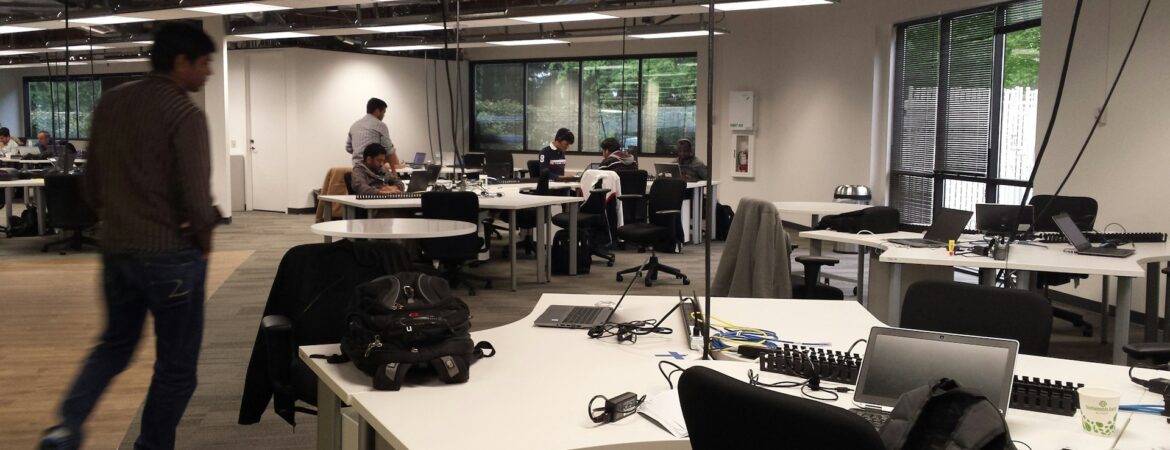
Speed changes everything at the early stage of a product. When a company is testing an idea, exploring a new market, or validating a technical concept, the goal is not perfection. The goal is clarity. A prototype or proof of concept exists to answer one question: Should we build this for real?
That sounds simple, yet many teams struggle to move quickly enough during validation. Internal engineers are often tied up with production systems. Product teams want to test ideas before committing budget. Stakeholders want evidence before approving an investment. In this phase, development partners who understand rapid iteration can make the difference between momentum and stagnation.
Toronto has become one of the most active technology hubs in North America, and its vendor ecosystem reflects that. Many firms offer software development. Far fewer specialize in early-stage engineering, where speed, adaptability, and technical judgment must all work together. The companies below are frequently considered by product teams looking to prototype fast without creating technical debt that blocks future scaling.
Early Validation Shapes Everything That Follows
Prototypes influence more than investor decks or stakeholder demos. They shape architecture decisions, data models, infrastructure assumptions, and product direction. When built carefully, even a temporary proof of concept can evolve into production software. When built carelessly, it becomes something teams have to throw away and rebuild.
Industry product research shows that companies that validate concepts early reduce development waste significantly. Teams that prototype before committing to full builds tend to discover usability flaws, performance constraints, or integration issues long before they become expensive problems.
That is why experienced rapid development partners focus on building just enough system to test assumptions without locking the product into fragile architecture. They balance speed with foresight, which is harder than it sounds.
1. Euristiq
When rapid validation is tied to real technical risk, Euristiq’s custom software development in Canada often enters early conversations. The company is known for structuring discovery and proof phases so teams can test product ideas quickly while still maintaining engineering discipline.
Founded in 2016, Euristiq works with enterprise and midmarket organizations across North America and Europe, including Philips, Bell Canada, Ryanair, Interac, and Gen Digital. Many of these projects begin with feasibility validation before expanding into full product development.
Their core capabilities include:
- Structured discovery phase lasting two to three weeks
- Proof of concept and MVP delivery in one to three months
- AI native product design
- Legacy system modernization for pilot environments
- Cloud development across AWS, Azure, and Google Cloud
- IoT and AIoT prototyping
- Dedicated certified development teams
The company holds ISO 27001:2022 certification and is an AWS Advanced Tier Services Partner. For teams exploring new product directions, structured planning combined with rapid execution often reduces uncertainty early.
Organizations typically involve Euristiq when prototypes must answer technical questions rather than simply demonstrate visuals.
2. Architech
Toronto-based Architech is often chosen when rapid prototyping must align with long term scalability. Some proof projects move quickly but create architectural constraints that limit future growth. Architech focuses on preventing that outcome.
Their services include:
- Cloud native prototype architecture
- Enterprise platform design
- API ecosystems
- Data platform engineering
Teams working with complex business models often need prototypes that simulate realistic system behavior. Architech’s architectural approach helps ensure that early builds reflect how a system will behave once scaled.
Companies expecting a prototype to evolve into production infrastructure frequently consider them.
3. Net Solutions
Net Solutions is commonly selected for product-driven prototypes where user experience plays a central role. Many proof-of-concept projects exist to validate market fit rather than technical feasibility. In those cases, usability and product flow matter as much as backend logic.

Their services include:
- Rapid product prototyping
- UX centered design
- Custom application development
- Cloud-based platforms
Prototypes built with strong product thinking tend to generate clearer feedback. When users interact with something realistic, their responses become more actionable. Teams that combine engineering speed with product intuition can often shorten validation cycles.
Organizations testing new digital products often shortlist Net Solutions for that reason.
4. MindSea
MindSea is frequently involved when companies want thoughtful prototypes that hold up under real usage testing. Some prototypes work in controlled demos but fail once real users interact with them. MindSea emphasizes reliability even at early stages.
Their capabilities include:
- Prototype application development
- Product validation and testing
- Mobile and web engineering
- Performance optimization
Testing concepts under realistic conditions helps teams understand how a product behaves outside the lab. Partners who account for performance, responsiveness, and stability early can produce more trustworthy results.
Companies planning user trials or pilot launches often find this approach useful.
5. Osedea
Montreal-based Osedea often supports rapid development initiatives where collaboration between stakeholders is constant. Early-stage projects typically involve shifting priorities, evolving requirements, and frequent feedback loops.
Their services include:
- Custom software prototyping
- AI and machine learning proof builds
- Microservice design
- Product consulting
Rapid validation environments demand flexibility. Teams that communicate clearly and adjust quickly tend to maintain momentum even when direction changes.
Organizations exploring experimental or research-driven products often appreciate that adaptability.
Speed Without Chaos
Fast development does not have to mean rushed engineering. The strongest prototype teams work quickly because they structure decisions carefully. They define assumptions before writing code. They test the riskiest components first. They avoid building unnecessary features.
This disciplined speed reduces wasted effort. It also helps stakeholders make decisions sooner, which keeps projects moving.
Companies that equate speed with improvisation often discover later that they must rebuild from scratch. Those who pair speed with structure usually progress more smoothly into production phases.
Signals of a Strong Prototyping Partner
Early-stage engineering has its own indicators of quality. Experienced partners tend to display certain behaviors consistently. They ask questions about the success criteria before starting. They define what must be proven and what can wait. They clarify which assumptions carry the highest risk.
They also explain tradeoffs openly. If a feature can be simulated instead of fully built, they say so. If a shortcut could cause misleading results, they point that out. This transparency helps teams interpret prototype outcomes correctly.
These habits often matter more than the specific tools or frameworks used.
From Prototype to Production
One of the biggest advantages of working with experienced rapid development teams is continuity. When the same engineers who built the proof of concept also understand the production roadmap, the transition time drops significantly.
They already know which parts were temporary, which components must be hardened, and which decisions need revisiting. This familiarity can reduce redevelopment effort and shorten release timelines.
Organizations that plan for this transition usually avoid the disruption that comes from switching vendors midstream.
Practical Impact on Product Strategy
Prototypes influence decision-making far beyond engineering. Leadership teams use them to evaluate investments. Sales teams use them to demonstrate concepts. Investors use them to assess feasibility. Customers use them to judge credibility.
A clear prototype can accelerate alignment across departments because it replaces speculation with evidence. That clarity often speeds up approvals and reduces debate.
When a proof built answers the right questions, it becomes a strategic tool rather than just a technical artifact.
Final Perspective
Toronto’s software market offers many capable development firms, yet rapid prototyping requires a specific combination of speed, discipline, and product awareness. The companies listed above are often considered because they can validate ideas quickly while still building systems that make sense technically.
For organizations exploring new products or testing uncertain concepts, the right partner can turn early experiments into confident decisions. Strong prototypes do more than demonstrate possibilities. They reveal whether an idea is worth pursuing at all.